A modern dark-themed office or control room with a long desk, multiple computer monitors, black office chairs, and warm orange LED accent lighting along the walls and desk base.

Where Ideas Find Their Structure

Shop now

Giving Every Line a Purpose

Our mission is to make Rust programming education organized, engaging, and grounded in practical understanding. We focus on explaining technical ideas through detailed written materials, carefully arranged modules, and hands-on activities. By connecting theory with coding practice, we encourage learners to develop their knowledge at their own pace.

  • A minimalist orange vector icon depicting three stacked server racks enclosed by brackets, representing a database or server stack, isolated on a white background.

    Structured Progress

    Explore Rust topics in a thoughtful sequence, from foundational syntax to detailed programming concepts.

  • A 3D isometric rendering of a geometric cube structure made of small brown cube nodes connected by thin brown lines, centered on a plain white background.

    Practical Exploration

    Apply each new concept through real, guided coding activities, examples, and independent practice tasks.

  • A minimalist geometric logo or emblem featuring a central metallic bronze sphere with a diamond cutout, flanked by four thin copper-colored lines leading to empty circular ends, set against a solid white background.

    Conceptual Clarity

    Discover readable explanations that connect Rust language features with their roles in working programs.

  • A minimalist orange vector icon depicting a software settings or configuration window with arrows and a gear, isolated on a white background.

    Thoughtful Materials

    Study carefully arranged materials that link technical ideas, code examples, and small review questions.

An Idea That Grew Into Dunqavirex

Dunqavirex began with a simple idea: Rust programming deserves a thoughtful learning approach that connects technical concepts with practical examples. We created our educational collection to help learners move from introductory syntax toward deeper subjects through structured explanations, coding exercises, and connected projects. Every course reflects our interest in clear teaching and meaningful exploration.

  • A bold white serif letter M centered inside a solid black circle on a white background.
  • linkedin logo
  • GitHub logo with a stylized cat silhouette inside a black circle on a white background

30-days refund guarantee

Try the course risk-free. If you're not satisfied for any reason, get a full refund. No questions asked. Refund requests may be submitted within 30 days in accordance with
our Refund Policy.

  • Derek Whitaker

    Derek Whitaker

    Derek was familiar with basic programming ideas but wanted to understand how Rust handles variables, ownership, and references without jumping between disconnected explanations.

    He appreciated the gradual course structure, annotated code examples, and focused exercises that connected unfamiliar concepts with practical situations.

    "The way each topic connected to the previous one gave me a clearer picture of how Rust code works."

  • Jason Stafford

    Jason Stafford

    Jason approached the materials with an interest in organizing larger programming tasks but found it difficult to decide how functions, structures, and modules should work together.

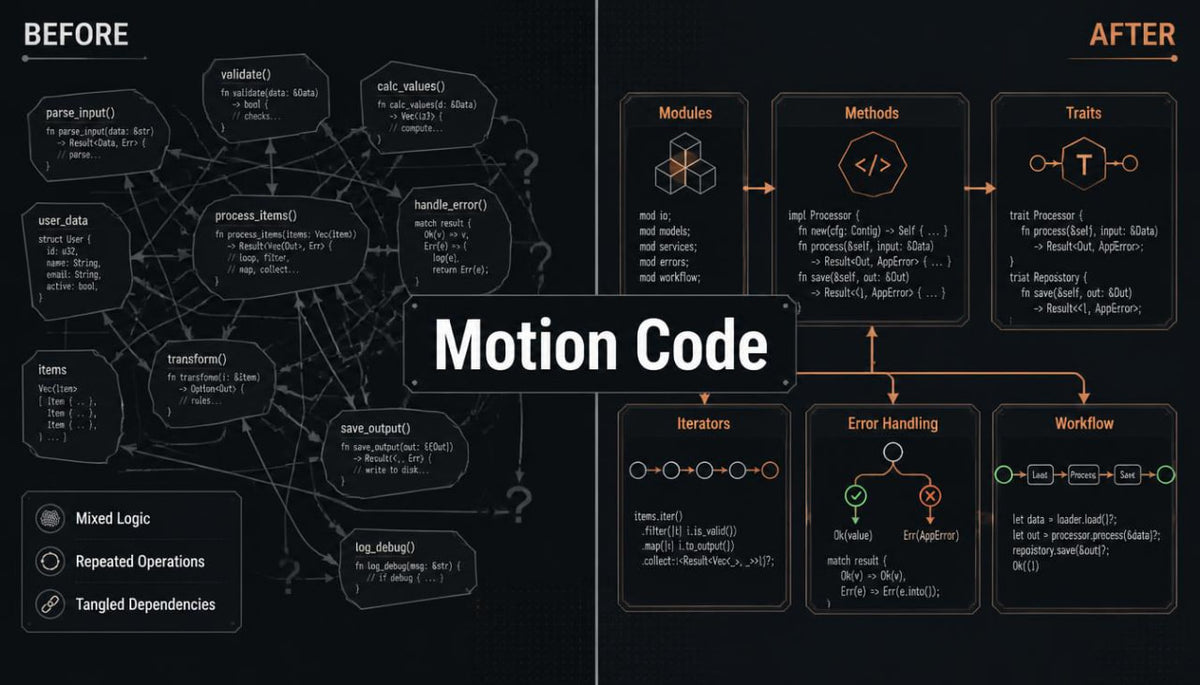
    He found the component diagrams, guided projects, and explanations of data relationships particularly useful for examining different approaches to program organization.

    "I appreciated seeing how separate pieces of code fit together and why certain structural decisions matter."

Your First Lines Begin Here

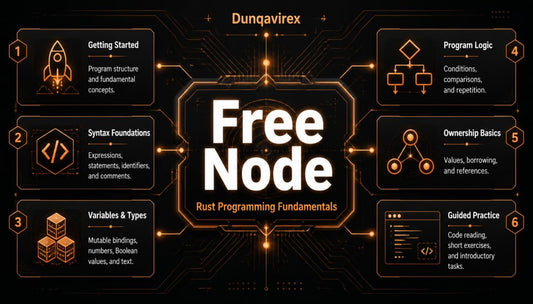
Begin exploring Rust Programming with introductory educational materials from Dunqavirex. Our free course introduces foundational concepts through clear explanations, readable code examples, and guided practice activities. Discover how we organize technical subjects and connect programming theory with practical exercises. Take your first steps into Rust and explore the learning approach that shapes our wider course collection.

  • Merrick Barley - Rust Systems Engineer

    Merrick Barley

    Rust Systems Engineer
    Merrick studies how Rust programs track memory and move data between components. He builds small examples to explain ownership rules. His work focuses on clear structure and focused code reviews.

  • Dashiell Moller - Concurrency Engineer

    Dashiell Moller

    Concurrency Engineer
    Dashiell examines how threads exchange information and coordinate shared state. He develops examples using channels and a lock. His work focuses on clear task boundaries and predictable behavior.

  • Keaton Hollis - Rust Backend Developer

    Keaton Hollis

    Rust Backend Developer
    Keaton designs request-handling logic and structured data workflows in Rust. He develops examples with validation and error paths. His work focuses on modular systems and well-defined interfaces.

A Glimpse Between the Chapters

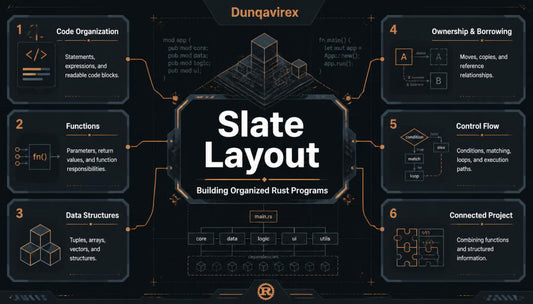
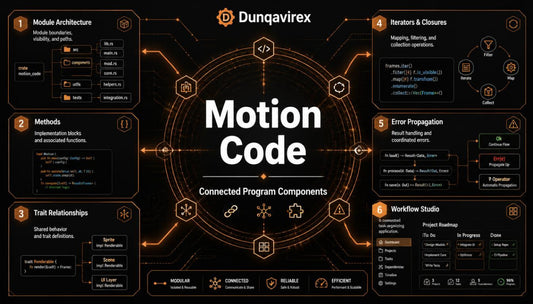
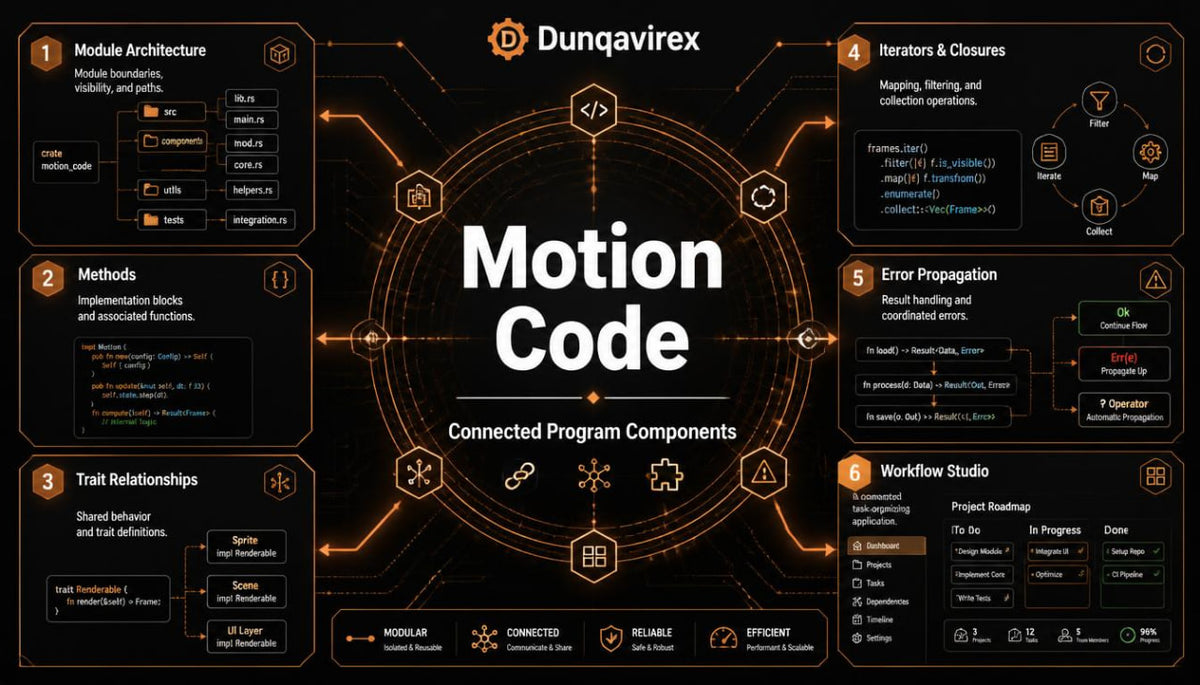
Explore the Dunqavirex Rust Programming collection and discover the different subjects covered throughout our learning materials. Each course introduces a distinct area of programming through structured explanations, practical examples, and guided exercises. From foundational syntax to advanced programming techniques, our collection offers a thoughtful progression of technical topics. Browse the course previews to examine their content, learning objectives, and educational approach before choosing your direction.

  • A smartphone displaying the Dunqavirex app with a 'Cloud Pattern' graphic, resting on a train tray table next to a coffee cup, a passport, and earbuds, with a scenic mountain and lake view outside the window.
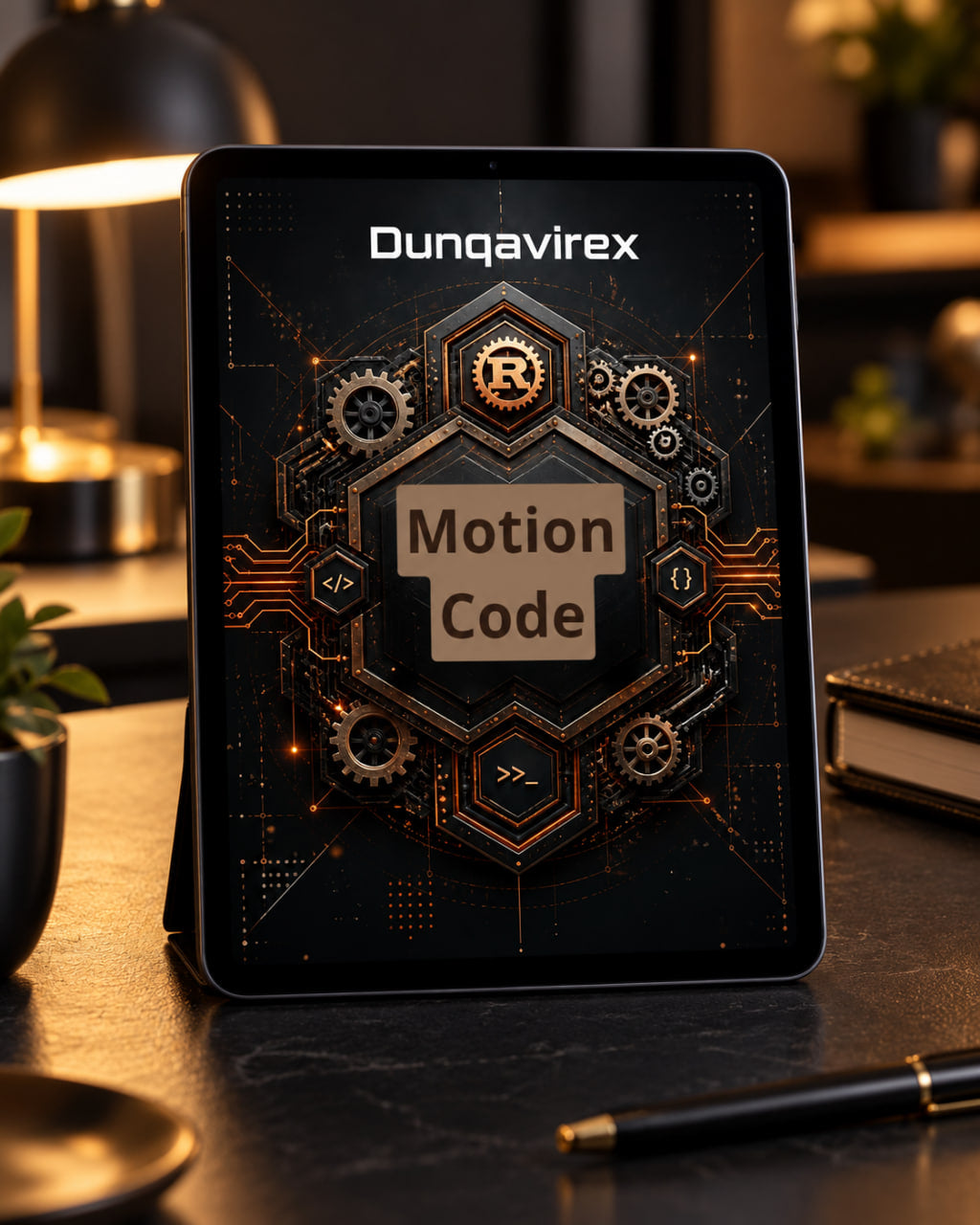
  • A tablet on a desk displaying the 'Dunqavirex Arc Pattern' digital design, surrounded by warm desk props like a lamp, notebook, and plant.
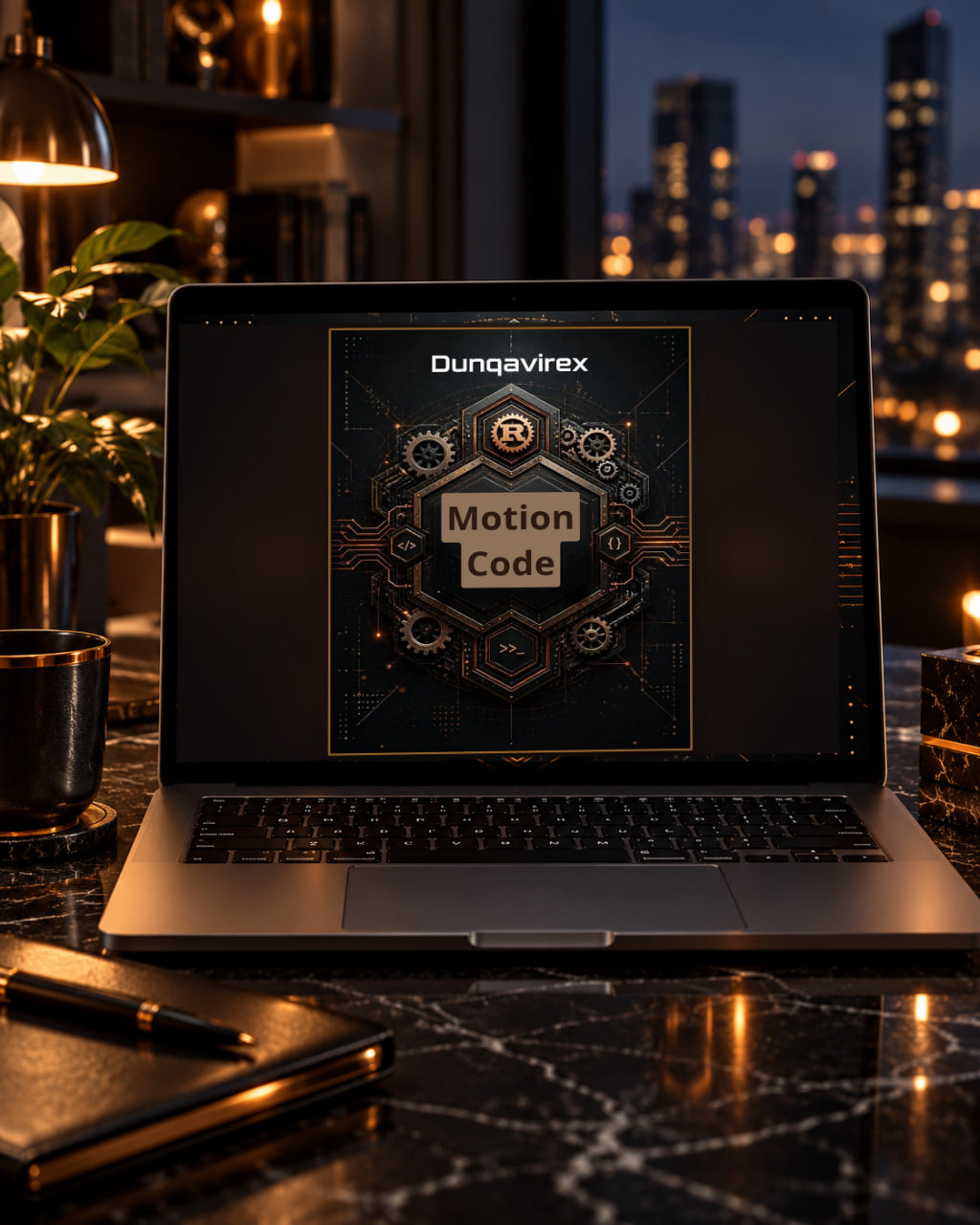
  • A laptop on a dark wooden desk displaying a digital graphic for 'Dunqavirex Cipher Space' in a warm, moody office setting with a plant, notebook, and pen.